


Are You the Right Student for the International Institute of Medical Tattoo Science and Artistry? An Honest Guide to Paramedical Tattoo Training in Florida

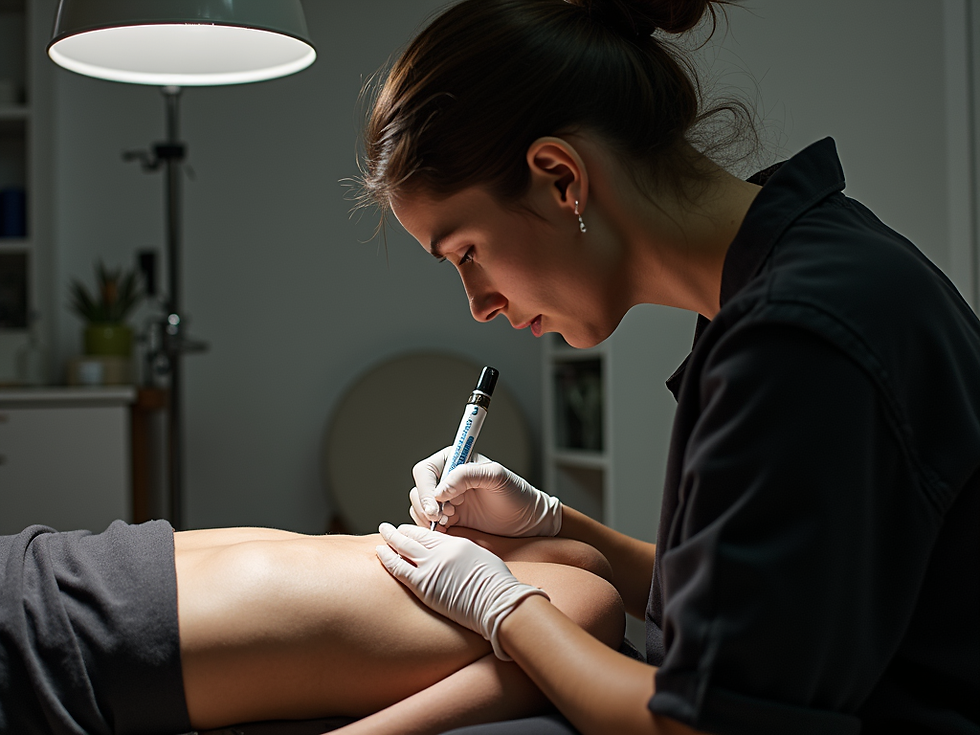
Are You the Right Student for the International Institute of Medical Tattoo Science and Artistry? An Honest Guide to Paramedical Tattoo Training in Florida

Quick Answer
The right student for the International Institute of Medical Tattoo Science and Artistry arrives ready to learn the deeper layers of paramedical tattooing, regardless of their starting point. Whether you are an experienced tattoo artist, a permanent makeup professional, a registered nurse, a nurse practitioner, a physician assistant, an esthetician, a plastic surgeon, or a career changer, the work that produces lasting results is not about technique alone. It is about humility, observation, and the willingness to refine.
The Question Most Paramedical Tattoo Trainers Will Not Ask You
When most people consider enrolling in paramedical tattoo training, they research the trainer. They study the portfolio. They compare prices. They look at certifications and ask about live client access. These are reasonable steps, and any serious student should take them.
But almost no one asks the question that determines whether the training will actually produce the result they are hoping for. Am I the right kind of student for this program?
This article exists to ask that question with you. Honestly, calmly, without judgment. Because at the International Institute of Medical Tattoo Science and Artistry in St. Petersburg, Florida, our outcomes are extraordinary when the right student walks through the door. And our outcomes plateau when the wrong fit walks in, regardless of how skilled they already are.
If you are reading this from Miami, Jacksonville, Orlando, Tampa, Fort Lauderdale, Sarasota, Tallahassee, or anywhere else in Florida or beyond, the question deserves an answer before you book.
Yes, Paramedical Tattooing Is Tattooing. And It Is Also Something Else Entirely.
A common moment happens in training. An experienced tattoo artist arrives, watches the first demonstration, and thinks some version of: "Oh. They are just tattooing like I do."
The thought is understandable. The mechanics overlap. There is a machine. There are needles. There is pigment going into skin. From the surface, it looks familiar.
It is not.
Body art tattooing places a designed image onto healthy skin where the goal is visibility. Paramedical tattooing places carefully matched pigment into compromised tissue, scar tissue, hypopigmented or hyperpigmented skin, or surgically reconstructed tissue, where the goal is invisibility, restoration, or natural three-dimensional illusion. The two disciplines share tools. They do not share frameworks.
A scar does not behave like virgin skin. A facelift incision does not respond like a forearm. A post-mastectomy chest does not heal like a calf. A C-section scar four years old reacts differently from a C-section scar four months old. Stretch marks across deflated abdominal skin take pigment in a pattern unlike any sleeve or back piece. And the stakes are different. The client in your chair is often a breast cancer survivor, a burn survivor, a post-surgical patient, a transgender client, or someone whose self-image has been carrying weight for years.
So no, this article is not telling you that experience as a tattoo artist disqualifies you. It does not. Skilled tattoo artists become some of our strongest paramedical graduates. But knowing how to tattoo well is the floor of paramedical work. Paramedical tattoo training is where the ceiling gets built.

Why You Came to Train In Person
If you are seriously considering training with the International Institute of Medical Tattoo Science and Artistry, something specific happened. You saw the work. You saw real clients with real outcomes. You watched a portfolio that did not look like a beginner's portfolio. And something in you said yes.
That instinct is worth honoring. It is also the only honest
reason to book.
You did not come to confirm what you already know. You came because you saw something you cannot quite produce yet, and you want to learn how. That is the truthful starting point of every great training experience.
Students who arrive holding tightly to their existing approach miss the entire point of the format. The course is intentionally structured around working on real clients alongside an active paramedical tattoo artist with more than 100's documented cases, in a clinical environment, with hands-on supervision. Synthetic skin practice is part of the curriculum. Color theory and undertone matching are part of the curriculum. But the centerpiece is what cannot be filmed or transcribed: clinical judgment in real time, on real tissue, with a real human being trusting you with their body.
You did not travel to St. Petersburg to watch the work. You came to absorb the way it is done.
When "I Could Just Learn This Online" Is Actually Fear Talking
Every trainer in this industry hears it eventually. A version of: "I think I could probably just learn this from YouTube." Or: "Couldn't I just figure this out from ChatGPT?" Or: "Online courses are basically the same thing, right?"
These statements are rarely about online courses.
They are almost always about fear.
Fear of investing money before knowing whether the career will earn it back. Fear of starting and failing. Fear of pricing the work. Fear of being seen. Fear of clients. Fear of stepping into a specialty where the stakes feel heavy. Fear of how long it takes to build a paramedical tattoo practice from scratch.
When fear shows up, it often disguises itself as a logical objection, because logic feels safer than fear. So a student will research a trainer, decide internally to invest, then find a reason to delay or to deflect. The reason often points outward, at the trainer, the price, or the format. Rarely does it point inward, where the actual hesitation lives.
I am writing this honestly because I have felt my own version of fear. Anyone who has built something meaningful in this industry has. The work is intimate. It is high-stakes. It is emotionally heavy at times. Fear is part of the territory.
But fear is information about you. It is not data about the trainer.
The students who thrive in our program at IIMTSA recognize their fear, name it honestly, and step forward anyway. They do not ask the trainer to defend the value of the training in order to soothe their hesitation. They book, they show up, they do the work, and they let the outcomes speak.
This is not a criticism. It is a clarity check. Fear is a normal part of any meaningful career step. What we cannot make space for in our training environment is fear that gets projected outward as doubt, comparison, or competition with the educator. That energy interrupts the learning of every other student in the room, and it interrupts the student who is carrying it most of all.
The Three Fears That Most Often Show Up in Training Conversations
Fear of money. The most common version is the worry that the investment will not pay back. This fear is often inverted. The students who avoid investing in expert training are the ones who plateau the longest, work the hardest for the smallest results, and most often quit. The students who train deeply, with mentorship and one year of post-training support, recoup their tuition quickly because they can take on complex cases other artists cannot.
Fear of being a beginner again. Experienced tattoo artists, established permanent makeup artists, and credentialed medical providers can find it uncomfortable to enter a learning environment as a student. This is a normal feeling. It does not survive long in students who treat it as a doorway rather than a wall.
Fear of the work itself. Paramedical tattooing involves clients who carry trauma, surgery, illness, or significant emotional weight. The fear of holding that responsibility is reasonable. It is also addressable. Trauma-informed practice, ethical consultation, treatment planning, and clinical assessment are taught throughout every program at the International Institute of Medical Tattoo Science and Artistry. You are not asked to carry it alone.
Who Thrives at IIMTSA
There is no single background that makes a great paramedical tattoo student. Our graduates come from many starting points.
Plastic surgeons and reconstructive surgeons across Florida who want to add paramedical tattooing inside their practice. Registered nurses and nurse practitioners in Miami, Tampa, Orlando, Jacksonville, and beyond who are expanding into aesthetics. Physician assistants ready to add a clinical specialty. Estheticians and master estheticians building toward advanced licensing. Permanent makeup professionals who want to move into restorative work. Body art tattoo artists who feel called toward something more clinical. Career changers from outside the medical and aesthetic field who feel called to this work.
What they share is not credentials. It is posture.
The students who thrive arrive curious. They observe before they comment. They take notes on technique even when they think they recognize it. They ask why instead of telling. They practice on synthetic skin until their muscle memory matches the new method. They treat live client cases with the seriousness those cases deserve. They accept that mastery in paramedical tattooing is not a course completion. It is a career-long refinement.
The students who plateau are the opposite. They arrive performing what they already know. They redirect demonstrations toward their own past work. They protect their existing technique from refinement. They confuse familiarity with competence.
If you read those two paragraphs and recognized yourself in the first one, you are likely a fit for our program. If you recognized yourself in the second one, that recognition itself is useful information. Sit with it before enrolling anywhere.

What This Training Actually Is
In plain language, here is what training at the International Institute of Medical Tattoo Science and Artistry looks like.
Classes are limited to one to three students. You work directly alongside an active paramedical tattoo artist with more than 100's documented cases in scar camouflage, stretch mark camouflage, and 3D areola restoration across five modalities. You practice on synthetic skin to internalize technique, color theory, undertone matching, and pigment behavior. You work on real client cases under direct supervision, including post-mastectomy areola restoration, breast lift scar camouflage, tummy tuck scar work, C-section scar correction, facelift incision blending, and stretch mark camouflage across diverse skin tones. You receive one full year of post-training support, so the questions that come up in your first months of practice are answered by someone who has handled them before.

It is hands-on. It is intimate. It is real.
It is also intentionally not for everyone.
On-Site Training for Florida Plastic Surgery Practices and Med Spas
For licensed plastic surgery practices, surgical centers, and med spas across Florida, we also offer an on-site option. Rather than sending your team to St. Petersburg, we travel to your facility. We train your providers, work alongside your team on supervised live cases, help you set up paramedical tattooing as a service line within your practice, advise on licensing and product setup, and build the foundation for sustainable in-house paramedical work.
This service is for serious operators. Practices in Miami, Jacksonville, Orlando, Fort Lauderdale, Tampa, Sarasota, and Tallahassee have used this model to add paramedical tattooing as a referenced specialty within their existing patient base. The mindset principle still applies. Practices whose teams approach the training as students grow into the work. Practices whose teams approach it as a checkbox do not.
A Word About Refinement
There is a phrase that defines our philosophy at the International Institute of Medical Tattoo Science and Artistry. Refinement over ego.
Mastery in paramedical tattooing is not declared. It is built, case by case, year by year. Every client teaches something new. Every healed result reveals something the trainer did not catch in the moment. Every conversation with another practitioner adds a layer.
The trainer who stops learning becomes obsolete. The student who stops learning never reaches the full expression of the work.
This is not philosophical fluff. It is the operating principle behind every paramedical tattoo career that lasts. The artists with the most extraordinary portfolios in this industry, the ones referenced by plastic surgeons and trusted by post-surgical patients, are the ones who have stayed humble enough to keep refining for fifteen, twenty, thirty years.
If refinement sounds like a relief, you are likely the right student for our program.
If refinement sounds like a threat, no training program will produce the outcome you are hoping for. Not ours, and not anyone else's.
How to Know If You Are Ready
Ask yourself three questions, honestly.
First, when I think about training, am I imagining what I will absorb, or am I imagining how I will look in the room? The first answer is the answer of a student. The second is the answer of a performer. Performers struggle in this work because the work cannot be performed.
Second, when I read about the trainer's portfolio, do I feel pulled toward the work, or do I feel competitive? Pull is the right energy. Competition with the trainer you came to learn from is misplaced energy.
Third, when fear comes up, where does it go? Does it become a question I ask myself, or does it become a complaint about the trainer, the price, or the program? The first is honest. The second is projection.
If your answers landed where you wanted them to, you are likely ready.
Frequently Asked Questions
Is paramedical tattoo training appropriate for an experienced tattoo artist? Yes, with the right mindset. Experienced tattoo artists thrive at the International Institute of Medical Tattoo Science and Artistry when they arrive curious about how paramedical tattooing differs from body art, rather than expecting it to be the same. The mechanics of tattooing transfer. The clinical, color theory, and tissue frameworks must be learned.
Can a registered nurse, nurse practitioner, or physician assistant train at IIMTSA? Yes. We regularly train RNs, NPs, PAs, plastic surgeons, estheticians, and other licensed medical and aesthetic providers from across Florida and the United States. Many use the training to expand their existing practice or add paramedical tattooing as a clinical specialty service.
Is online learning a substitute for in-person paramedical tattoo training? For paramedical tattooing, no. Online learning can support theory and pre-study material, but the core of the work is clinical judgment on real tissue under direct supervision. That cannot be replicated through video alone. This is why our program is built around hands-on training in a clinical environment.
How is the training structured at the International Institute of Medical Tattoo Science and Artistry? Classes are limited to one to three students. Training combines synthetic skin practice with live client cases, in a clinical environment, alongside an active paramedical tattoo artist with more than 500 documented cases. One year of post-training support is included.
Do you offer on-site paramedical tattoo training for Florida plastic surgery practices and med spas? Yes. For plastic surgery practices, surgical centers, and med spas in Miami, Jacksonville, Orlando, Tampa, Fort Lauderdale, Sarasota, Tallahassee, and elsewhere across Florida, we offer an on-site model where we travel to your facility, train your team, and help you integrate paramedical tattooing as a service line.
What if I am not sure I am the right fit? Uncertainty is healthy. The students we worry about are the ones who feel certain too quickly. If you are still considering whether this work and this format are right for you, reach out. We would rather have an honest conversation before you book than welcome someone whose expectations were not met because the conversation never happened.
A Closing Note
If you have read this far and you are still uncertain, that is healthy. Uncertainty is not a sign that you are the wrong student. It is often a sign that you take this work seriously.
Sit with the questions in this article. Notice where your hesitation lives. If it lives in fear, name it honestly and decide what you want to do with it. If it lives in clarity, you already have your answer.
The International Institute of Medical Tattoo Science and Artistry is not for everyone. It is not designed to be. It is designed for the student who comes to learn, who respects the depth of the work, who arrives ready to refine, and who is willing to enter as a beginner regardless of their starting point.
If that is you, we will meet you with everything we have.
International Institute of Medical Tattoo Science and Artistry St. Petersburg, Florida medtattooeducation.com areolatattootraining.com 727-504-4664


Comments