


Scar Camouflage Tattoo Training
Scar Camouflage Tattoo Training Course in Florida | Learn to Conceal Scars & Improve Lives
Change lives with one stroke at a time
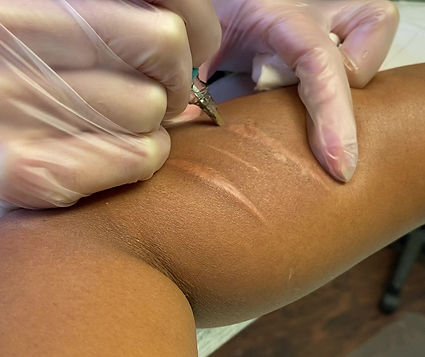

Scar Camouflage Tattoo Training
Advanced Paramedical Tattoo Education | Florida
Scar Camouflage Tattoo Training | St. Petersburg, Florida
Scar camouflage tattooing is not about adding color to skin. It is about understanding undertones, texture, scar behavior, pigment layering, and long-term healing outcomes — and that is exactly what we teach.
This advanced scar camouflage tattoo training is part of our 3-Day Paramedical Tattoo Course in St. Petersburg, Florida, designed for professionals who want to work confidently on real scar cases, not practice theory alone.
3-Day Paramedical Tattoo Course
Florida Based
Enrollment is limited, and every day is hands-on, case-based education working on different real scar cases.

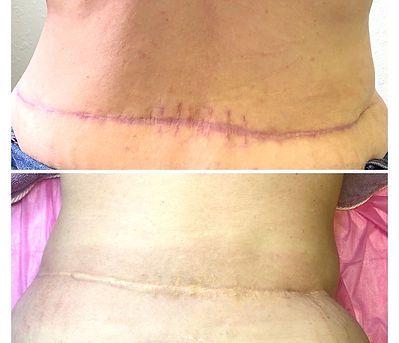
This Is Not Basic Camouflage Training
st scar camouflage courses focus on surface color matching. We go further, into the layers underneath.
In this training you will learn:
- Layering undertones beneath scars
- Advanced pigment mixing for real-world skin variations
- How scar tissue behaves differently than normal skin
- How to prep ink for different types of scars
- How to mix ink across different pigment brands
- Why "perfect color" often fails without proper depth control
- How to correct, neutralize, and refine results over multiple sessions
- Working on different real cases every day, not one repeated formula
- How to use AI to help mix and match color accurately
This is the difference between temporary results and natural, long-term scar camouflage.
This is the difference between temporary results and natural, long-term camouflage.
three-Day Paramedical Tattoo Course
Florida Based
-
Limited enrollment
-
Hands-on, case-based education- working daily on different- scar cases
-
How Is Your Scar Camouflage Tattoo Training Different?
What makes your scar camouflage tattoo training different from other schools?
At the International Institute of Medical Tattoo Science & Artistry, we run a diamond-level training. Our scar camouflage tattoo training is taught live, on real people, every single day. Students work on multiple real scar cases daily, including facelift scars, areola and breast surgery scars, tummy tuck scars, stretch marks, and complex or dark surgical scars. You will also see scars that are a session or two into their healing process, so you learn to read different healed results across real cases, not just a single starting point.
This kind of live, real-world exposure is what builds true clinical confidence in scar camouflage tattooing.
Your trainer has done the work herself for over two decades and brings that hands-on experience directly into every session. See more of that work at www.imagineyounew.com.
Do students actually work on real scar camouflage cases?
Yes. Students train on live clients with real scars, not just one model or a single case. Throughout the program, students are exposed to different scar types, skin tones, textures, and healing stages, which is essential for learning proper scar camouflage tattooing. Scar camouflage is not a one-formula technique, and seeing multiple cases daily is what teaches you how scars actually behave on different bodies.
Also, your trainer has expererienced it all and can excelerate you with her knowledge go here to see more of her work
Types of Scars We work On
What Types of Scars Are Worked On During Training?
Students work on a wide range of real paramedical tattoo cases, including:
- Facelift scar camouflage
- Areola and breast surgery or breast augmentation scars
- Tummy tuck and C-section scars
- Stretch mark camouflage
- Vitiligo camouflage
- Hypopigmented (white) scars
- Dark and hyperpigmented scars
- Burn scar camouflage
- Skin graft camouflage
- Textured and uneven surgical scars
This variety is what prepares students for real clients, not just ideal, best-case scenarios.
Scar camouflage is not a one-formula technique — and seeing multiple cases daily is essential to understanding how scars behave differently on every body.
Students work on a wide range of real medical tattoo cases, including:
-
Facelift scar camouflage
-
vitiligo
-
Areola and breast surgery scars
-
Tummy tuck and C-section scars
-
Stretch mark camouflage
-
Hypopigmented (white) scars
-
Dark and hyperpigmented scars
-
Textured and uneven surgical scars
This variety prepares students for real clients, not ideal scenarios.
Why are your classes so small?
Classes are intentionally limited to two students at a time. Scar camouflage tattooing requires precision, judgment, and immediate feedback, especially when working on compromised skin. Small class sizes allow for:
- One-on-one instruction
- Real-time corrections
- Personalized technique adjustments
- Close supervision during live procedures
- Client after client of guided, real-time practice
- Enough case volume that you leave feeling genuinely experienced
This level of direct attention is not possible in large group trainings.
How does small class size improve learning?
With only two students per class, every student receives direct, hands-on guidance throughout the day. Your instructor can watch needle depth, pigment saturation, hand speed, and blending technique in real time, something that is nearly impossible in a crowded classroom. That matters in scar camouflage tattooing, where mistakes can permanently affect a client's skin.
How does small class size improve learning?
Do You Teach Advanced Layering and Undertone Correction?
Yes. A major focus of the training is layering, undertone correction, and how pigment behaves in scar tissue. Students learn how to:
- Identify underlying tones (red, yellow, gray, green, purple)
- Build color gradually instead of overloading pigment
- Adjust ink dilution based on scar density
- Layer pigments safely across multiple sessions
- Anticipate how color will heal and soften over time
This advanced approach is what produces natural-looking, long-term scar camouflage results.
Is This Training Focused on Long-Term Results?
Yes. The training emphasizes how scars heal over time, not just how they look immediately after tattooing. Students learn how pigment fades, shifts, and settles in scar tissue, and how to plan treatments that still look natural months and years later. That long-term thinking is what defines real paramedical tattoo education.
Do you teach advanced layering and undertone
correction?
Is this training focused on long-term results?
Absolutely. The training emphasizes how scars heal over time, not just how they look immediately after tattooing. Students learn how pigment fades, shifts, and settles in scar tissue — and how to plan treatments that look natural months and years later.
This long-term thinking is what defines true medical tattoo education.
Why does the pricing reflect the training experience?
hy Does the Pricing Reflect the Training Experience?
The course is $7,500 and covers all rounds of paramedical tattooing. That pricing reflects:
- Daily, hands-on work with live clients
- Exposure to multiple real scar cases, not one repeated demo
- Extremely small class sizes of only two students
- Advanced, one-on-one instruction
- Techniques that typically take years of experience to develop
- A trainer with decades of hands-on experience in the field
This is mentorship-level paramedical tattoo training, not a mass-produced course. Graduates receive their Paramedical Tattoo Certification (PTC).
Who is This Training For?
Is This Scar Camouflage Tattoo Training Suitable for Beginners?
This program is best suited for artists and providers who are serious about medical tattooing and want real, lasting skill. Fundamentals are taught from day one, and the training moves efficiently into advanced decision-making, because real clients deserve a confident, well-trained artist.
Who Takes This Training?
Our students include plastic surgeons, nurses, PMU artists, aestheticians, physician assistants, and other medical field providers, along with anyone who is serious about learning paramedical tattooing. No matter your background, training is built around real, hands-on case work so you leave ready for real clients.
What Do Students Leave With After Training?
Graduates leave with:
- Hands-on experience across real scar camouflage cases
- Confidence working on many different scar types
- Guidance on write-ups and referral relationships with medspas and plastic surgeons
- Paramedical Tattoo Certification (PTC) in scar and stretch mark camouflage
- 3D areola tattoo certification
- Advanced pigment layering and undertone knowledge
- The ability to properly assess a scar before treating it
- Professional standards for medical tattooing
More than anything, they leave prepared for real-world scar camouflage tattoo work.
What do students leave with after training?
Graduates leave with:
-
Hands-on experience with real scar camouflage cases
-
Confidence working on different scar types
-
write ups to medspas or plastic surgeons
-
PTC paramedical tattoo certification- scar and stretch mark camouflage
-
3d areola tattoo certification
-
Advanced pigment layering and undertone knowledge
-
The ability to assess scars properly
-
Professional standards for medical tattooing
More than anything, they leave prepared for real-world scar camouflage tattoo work.


Still needs more session


Paramedical Tattoo Scar Camouflage Training

Take your tattoo business to the next level by learning the subtle art of camouflage. This course is comprehensive and covers everything you need to know about scars, what causes them, and how to treat them using paramedical tattooing methods.
Using needling and micropigmentation, you will train on real cases involving facelift scars, skin grafts, tummy tucks, breast augmentation and breast surgery scars, burns, and more.
What To Expect?
Introduction to medical camouflage tattooing
- What medical camouflage is, and how it fits within skin care and the aesthetics market
- Tattooing, micropigmentation, and PMU, and how they relate to paramedical work
- Anatomy of the skin
- Types of scars and how each one is treated
- Scar camouflage and sun exposure
- Contraindications for medical camouflage
- Vitiligo and the different types of vitiligo
- Wound care camouflage
- Dark scar camouflage and neutralizing scars
- Restoration camouflage techniques
- Biosafety and cross-contamination protocols
- Setting up your workspace and workplace
- Pigments, ingredients, and brands
- Working across different skin tones
- Machines and needles
- Medical camouflage techniques and color matching
- Color and pigment formulas
- Healing process and aftercare
- Hands-on work with real client models across different cases
- Pricing your services and marketing materials


